

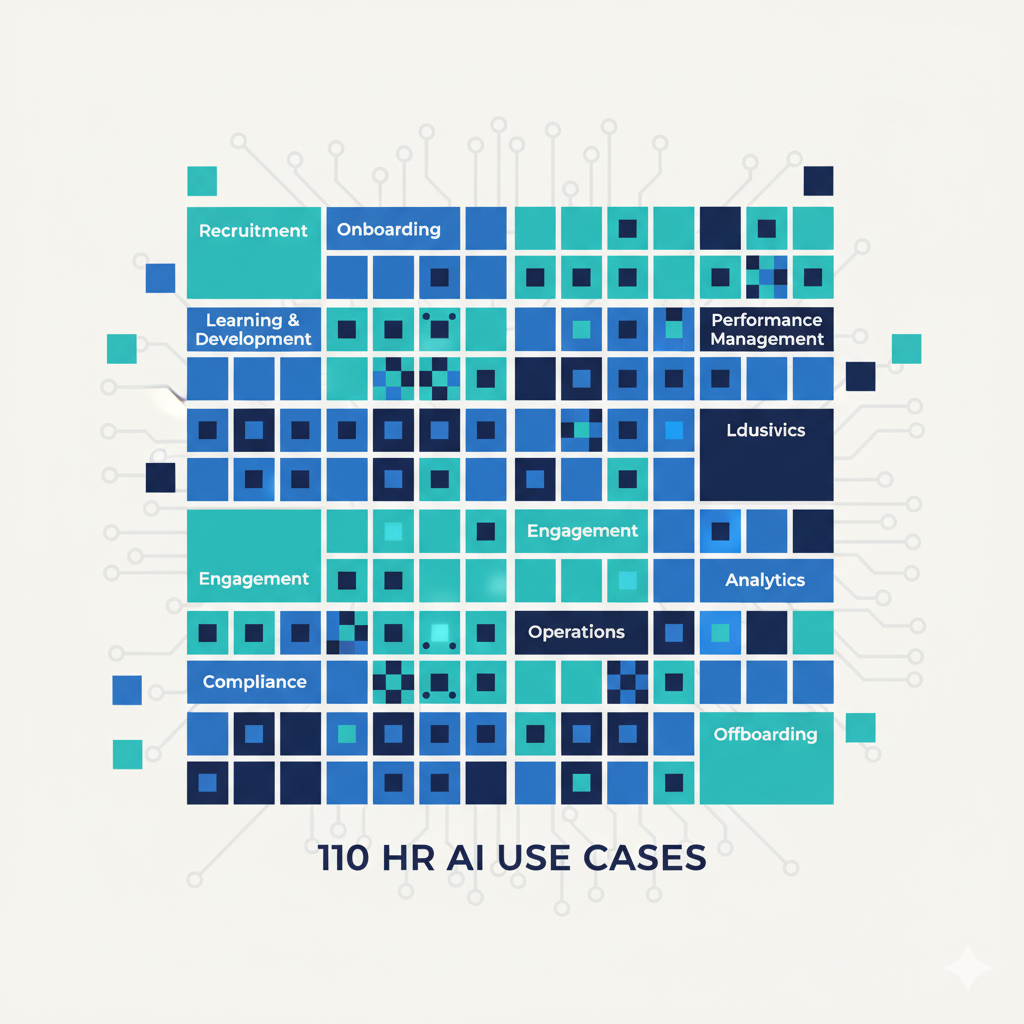
From Recruitment to Retention—AI Applications That Put Humanity at the Center
Make AI Matter Series | Tekdi Technologies
Introduction
At Tekdi, we believe technology should catalyze societal transformation by empowering organizations and individuals. In HR, this means using AI not to replace human judgment, but to amplify human potential—freeing HR professionals to focus on what matters most: building inclusive cultures, developing people, and creating meaningful work experiences.
This guide emerges from our "Make AI Matter" workshops, where we've seen HR teams transform from AI-curious to AI-productive. It catalogs 100 practical use cases across every HR function, emphasizing approaches that build for most, not just a few.
Our philosophy: AI should democratize access to sophisticated HR capabilities while preserving the human elements that make organizations thrive. Every recommendation here reflects our commitment to sustainable, ethical AI that gives back to the broader community.
How to use this guide:
- ⭐ = Quick wins (implement in days/weeks)
- 🚀 = Transformational opportunities (implement in months)
- 🔧 = Integration-dependent solutions
- 🌱 = Community-contributing approaches
1. TALENT ACQUISITION & RECRUITMENT (15 use cases)
Connecting the right people with meaningful opportunities
Sourcing & Outreach
1. AI-Powered Boolean Search Generation ⭐
- What it does: Transforms job requirements into precise search strings
- Human impact: Reduces sourcing time by 70%, enables focus on relationship building
- Example: "Senior Backend Engineer, microservices experience" becomes optimized LinkedIn search:
(("Senior Backend Engineer" OR "Backend Lead") AND (microservices OR "micro services") AND (Kubernetes OR K8s)) - Tools: Claude, ChatGPT with well-crafted prompts
- Tekdi perspective: Build reusable search templates that your entire talent team can leverage
2. Inclusive Outreach at Scale 🚀
- What it does: Personalizes candidate communications while removing unconscious bias
- Human impact: Increases response rates 40% while promoting diversity
- Example: AI analyzes candidate's GitHub projects and open-source contributions, crafts message: "Your work on accessibility features in the payment library caught our attention—it aligns perfectly with our mission to build technology for everyone."
- Community angle: Share anonymized templates that promote inclusive hiring practices
3. Passive Talent Discovery 🔧🌱
- What it does: Identifies talented professionals through their contributions to open communities
- Human impact: Expands talent pool beyond traditional channels
- Example: AI scans open-source contributions, Stack Overflow answers, technical blog posts to identify skilled professionals not actively job hunting
- Open approach: Contribute back to communities by highlighting valuable contributors
4. Bias-Aware Job Description Optimization ⭐🌱
- What it does: Rewrites JDs to remove exclusionary language and improve accessibility
- Human impact: Increases diverse applicant pool by 25-40%
- Example: Transforms "rockstar developer" to "skilled developer who thrives in collaborative environments," removes unnecessary degree requirements, adds skills-based alternatives
- Community value: Open-source bias detection patterns for others to use
5. Authentic Employer Brand Content ⭐
- What it does: Creates genuine social media and blog content showcasing real employee experiences
- Human impact: Builds trust with candidates through transparency
- Example: AI helps craft LinkedIn posts about your new parental leave policy, highlighting actual employee stories and impact on team dynamics
- Values alignment: Focus on policies that demonstrate care for people and communities
Screening & Assessment
6. Holistic Resume Screening 🚀🔧
- What it does: Evaluates candidates on skills, potential, and values alignment while monitoring for bias
- Human impact: Reduces screening time by 80% while improving diversity metrics
- Process: AI scores technical skills (40%), growth mindset indicators (30%), mission alignment (30%), then flags any patterns suggesting unconscious bias
- Transparency: Candidates can request explanation of scoring methodology
7. Skills-First Gap Analysis ⭐
- What it does: Maps candidate strengths against role requirements, identifies development opportunities
- Human impact: Transforms hiring from gatekeeping to capability building
- Example: "Candidate excels in 8/10 required areas. Kubernetes experience gap can be addressed through 2-week intensive training. Strong fit for role with learning commitment."
- Growth mindset: Frame gaps as development opportunities, not disqualifiers
8. Conversational Pre-Screening 🚀🔧
- What it does: Uses AI to analyze video responses for communication style and problem-solving approach
- Human impact: Provides richer candidate insights while saving interviewer time
- Ethical approach: Focuses on relevant job skills, not personality profiling
- Transparency: Clear disclosure of AI analysis, human review of all decisions
9. Collaborative Coding Assessment 🔧🌱
- What it does: Evaluates technical submissions for quality, creativity, and collaborative potential
- Human impact: Assesses real-world coding ability over algorithmic puzzles
- Community angle: Candidates can choose to contribute solutions to open-source projects
- Feedback focus: Detailed, constructive feedback helps candidates improve regardless of outcome
10. Values-Based Culture Assessment 🚀
- What it does: Analyzes interview responses for alignment with organizational values and mission
- Human impact: Builds teams unified around purpose, not just skills
- Example: For "Build for most, not for few" value, AI looks for examples of inclusive thinking, accessibility considerations, or broad impact focus
- Authentic approach: Base assessment on demonstrated behaviors, not stated preferences
Interview Excellence
11. Contextual Question Generation ⭐
- What it does: Creates interview questions tailored to candidate background and role requirements
- Human impact: More engaging interviews that reveal true capabilities
- Example: For career changer from education to tech: "How might your experience designing curricula for diverse learners influence your approach to user experience design?"
- Inclusive design: Questions that value diverse backgrounds and non-traditional paths
12. Structured Interview Frameworks ⭐
- What it does: Builds consistent, fair interview processes with clear evaluation criteria
- Human impact: Reduces bias while improving candidate experience
- Framework: 45-minute guide with behavioral questions (20 min), technical discussion (15 min), candidate questions (10 min), plus red flags to avoid and ideal response indicators
- Continuous improvement: Regular framework updates based on hiring outcomes
13. Interview Intelligence Synthesis ⭐
- What it does: Converts multiple interviewer notes into structured, actionable summaries
- Human impact: Faster decision-making with better candidate insights
- Output format: Key strengths (3 bullets), development areas (2 bullets), team consensus view, recommended next steps
- Bias mitigation: Highlights when feedback patterns suggest unconscious bias
14. Data-Driven Candidate Comparison ⭐
- What it does: Creates objective frameworks for comparing finalists
- Human impact: More equitable selection process with clear rationale
- Dimensions: Role competency, team collaboration potential, mission alignment, growth trajectory, practical considerations
- Decision support: Helps teams move beyond "gut feel" to evidence-based choices
15. Personalized Offer Crafting ⭐
- What it does: Generates compelling offer letters that reflect company values and candidate priorities
- Human impact: Higher acceptance rates through thoughtful personalization
- Elements: Role-specific growth opportunities, mission connection, team introductions, community impact potential
- Care emphasis: Demonstrates genuine investment in candidate success
2. ONBOARDING (10 use cases)
Creating belonging from day one
16. Adaptive Integration Planning 🚀
- What it does: Designs personalized 30/60/90-day journeys based on experience level and role
- Human impact: 50% faster time-to-productivity with better retention
- Approach: Senior hires get accelerated technical onboarding plus strategic context; new graduates get additional mentorship and skill development
- Community connection: Links new hires with relevant open-source projects or volunteer opportunities
17. Always-Available Onboarding Assistant ⭐
- What it does: Answers new hire questions about policies, processes, and benefits 24/7
- Human impact: Reduces anxiety, enables self-service learning
- Example: "Do I need to submit tax forms if I'm working remotely from another state?" → Provides accurate, current information with links to resources
- Human handoff: Seamlessly escalates complex questions to appropriate team members
18. Intelligent IT Provisioning 🔧
- What it does: Automatically generates equipment and access requests based on role requirements
- Human impact: Zero delays in getting new hires productive
- Smart defaults: Senior Backend Engineer → Appropriate laptop specs, software licenses (IntelliJ, Docker, AWS), team channel access, repository permissions
- Security-first: Principle of least privilege with easy upgrade paths
19. Warm Team Introductions ⭐
- What it does: Creates welcoming, informative team announcement messages
- Human impact: Builds immediate connections and reduces first-day anxiety
- Personal touch: "Excited to welcome Maya, who joins us from Adobe where she led accessibility initiatives. Maya's passion for inclusive design and hiking makes her a perfect addition to our adventure-loving design team."
- Culture integration: Highlights both professional achievements and personal interests
20. Thoughtful Buddy Matching 🚀
- What it does: Pairs new hires with mentors based on complementary skills, shared interests, and working styles
- Human impact: 60% improvement in early engagement scores
- Algorithm factors: Technical expertise overlap, communication preferences, career development goals, geographic location for remote teams
- Mutual benefit: Structured programs that develop mentoring skills in existing employees
21. Proactive Progress Monitoring 🔧
- What it does: Tracks onboarding milestone completion and flags potential issues
- Human impact: Early intervention prevents problems from becoming crises
- Smart alerts: "Maya hasn't accessed the design system documentation yet (Day 12). Recommended action: Quick check-in with design lead about project assignments."
- Privacy-first: Focuses on task completion, not surveillance
22. Curated Learning Pathways 🚀
- What it does: Assembles relevant educational resources based on role requirements and skill gaps
- Human impact: Accelerated learning with clear development roadmap
- Example: Product manager transitioning from engineering → "API fundamentals for PMs," "Stakeholder communication," internal architecture overview, customer interview techniques
- Open resources: Prioritizes freely available, high-quality educational content
23. Early Engagement Insights ⭐
- What it does: Analyzes new hire communication patterns to suggest integration improvements
- Human impact: Identifies engagement issues before they become retention problems
- Respectful monitoring: With full consent, tracks participation in team discussions and social channels
- Actionable insights: "Maya actively participates in design critiques but hasn't joined team social events. Consider: Direct invitation to next team lunch."
24. Comprehensive Feedback Integration ⭐
- What it does: Synthesizes multiple stakeholder perspectives on new hire progress
- Human impact: Holistic view enables targeted support
- Sources: Manager observations, peer feedback, self-assessment, project outcomes
- Growth focus: "Strong technical contributions early. Needs support building stakeholder relationships. Recommend: Communication skills workshop, customer meeting shadowing."
25. Continuous Onboarding Optimization 🚀
- What it does: Analyzes onboarding effectiveness to improve future experiences
- Human impact: Systematic improvement based on real outcomes
- Pattern detection: "Benefits enrollment completion drops 40% at remote employees. Root cause: Complex portal navigation. Recommendation: Simplified mobile experience."
- Community sharing: Contribute successful onboarding patterns to HR open-source communities
3. LEARNING & DEVELOPMENT (15 use cases)
Unlocking human potential through continuous growth
Content Creation & Curation
26. Comprehensive Training Development 🚀
- What it does: Creates complete learning experiences from topic outlines
- Human impact: Democratizes high-quality training creation
- Output: "Effective Feedback" course with learning objectives, 6 progressive modules, interactive exercises, real-world scenarios, knowledge assessments, facilitator guides
- Open approach: Share successful training frameworks with the broader community
27. Accessible Microlearning ⭐
- What it does: Transforms dense content into digestible, engaging formats
- Human impact: Increases completion rates by 75% through better accessibility
- Example: 40-page compliance manual → 8 focused modules (5 minutes each) with key concepts, practical scenarios, quick knowledge checks
- Universal design: Content accessible to different learning styles and abilities
28. Engaging Video Content ⭐
- What it does: Generates scripts for training videos that connect with diverse audiences
- Human impact: Professional-quality content creation without specialized expertise
- Approach: "3-minute explainer on new expense policy: conversational tone, real-world examples, clear action steps"
- Authentic voice: Maintains organizational culture while ensuring clarity
29. Comprehensive Assessment Design ⭐
- What it does: Creates varied, fair evaluation methods for different learning objectives
- Human impact: Better measurement of actual skill development
- Variety: Multiple choice for knowledge retention, scenarios for application, peer assessments for collaboration skills
- Growth mindset: Assessments as learning tools, not gatekeepers
30. Global Learning Access 🚀
- What it does: Translates and culturally adapts training content for diverse teams
- Human impact: Ensures equal development opportunities regardless of language or location
- Cultural sensitivity: Adapts examples, case studies, and communication styles appropriately
- Community contribution: Share translation frameworks to reduce barriers globally
Personalization & Support
31. Individual Development Journeys 🚀🔧
- What it does: Creates customized learning paths based on current skills, career goals, and organizational needs
- Human impact: 3x higher course completion rates through personal relevance
- Example: Backend engineer → ML transition: Python for ML → Statistics foundations → Applied ML → Capstone project → Mentorship matching
- Flexibility: Adaptive pacing based on individual progress and competing priorities
32. Skills Mapping & Gap Analysis 🚀
- What it does: Identifies specific development needs for career advancement
- Human impact: Clear roadmap from current position to dream role
- Analysis: Current Senior Developer vs. Engineering Manager requirements → Technical leadership ✓, People management (gap), Budget planning (gap), Strategic thinking (developing)
- Action-oriented: Specific recommendations for each gap area
33. Intelligent Content Recommendation 🔧
- What it does: Suggests relevant learning based on role, interests, and organizational priorities
- Human impact: Serendipitous discovery of valuable development opportunities
- Smart matching: "Conflict resolution" search → Course recommendations, Harvard Business Review articles, internal case studies, mentor connections
- Diverse sources: Mix of formal courses, articles, videos, podcasts, hands-on projects
34. Adaptive Learning Technology 🔧
- What it does: Adjusts difficulty and pacing based on individual progress
- Human impact: Optimal challenge level keeps learners engaged without overwhelming
- Smart progression: Excel basics mastery → Skip intermediate → Advanced functions + challenging projects
- Confidence building: Celebrates achievements while maintaining appropriate stretch
Interactive Learning Support
35. 24/7 Learning Companion 🚀
- What it does: Provides continuous support for skill development questions
- Human impact: Removes barriers to learning through immediate assistance
- Example: "I don't understand pivot tables" → Explanation, tutorial links, practice exercises, office hours signup
- Human connection: Seamlessly connects learners with subject matter experts when needed
36. Safe Practice Environment 🚀
- What it does: Enables realistic skill practice through simulated scenarios
- Human impact: Builds confidence before high-stakes real-world application
- Sales training: AI plays challenging customer, adapts responses based on learner approach, provides specific feedback on technique improvement
- Psychological safety: Practice failure becomes learning opportunity, not performance evaluation
37. Real-Time Skill Feedback ⭐
- What it does: Evaluates practice work and suggests specific improvements
- Human impact: Faster skill development through immediate, actionable feedback
- Example: Written communication exercise → Clarity score (8/10), Conciseness (6/10), Tone (9/10) + specific suggestions: "Consider shorter paragraphs and bullet points for complex information"
- Growth orientation: Focus on improvement rather than judgment
38. Motivation & Engagement 🔧
- What it does: Provides personalized encouragement and progress reminders
- Human impact: Higher completion rates through sustained motivation
- Personal approach: "You're 60% through Leadership Foundations—great momentum! Your manager mentioned you're applying these concepts in team meetings. Complete Module 5 this week to maintain your learning streak."
- Community support: Connect learners with peers on similar journeys
Learning Analytics & Insights
39. Training Impact Measurement 🚀
- What it does: Correlates learning activities with business outcomes
- Human impact: Evidence-based L&D investment decisions
- Analysis: "Agile Project Management" participants show 25% faster delivery times and 15% higher team satisfaction scores
- ROI demonstration: Clear business case for continued learning investment
40. Knowledge Retention Support ⭐
- What it does: Reinforces learning through strategically timed review
- Human impact: Long-term skill retention rather than short-term cramming
- Spaced repetition: Compliance training → Follow-up quizzes at 1 week, 1 month, 3 months with fresh scenarios
- Practical application: Connect review sessions to real work situations
4. PERFORMANCE MANAGEMENT (12 use cases)
Fostering growth through meaningful feedback and development
Goal Setting & Alignment
41. OKR Excellence Assistant ⭐
- What it does: Helps employees write clear, measurable, inspiring objectives
- Human impact: Better goal clarity leads to 40% higher achievement rates
- Transformation: "Improve customer satisfaction" → "Increase customer NPS from 65 to 75 by Q3 through faster response times (<2 hours) and proactive outreach to at-risk accounts"
- Values integration: Ensures goals reflect organizational mission and individual growth
42. Strategic Alignment Checker 🚀
- What it does: Verifies individual goals connect meaningfully to team and company objectives
- Human impact: Eliminates wasted effort on misaligned priorities
- Analysis: Individual backend performance goal ✓ aligns with team efficiency OKR. Documentation goal ⚠️ weak connection → Suggest linking to "Developer Experience" initiative
- Coherence building: Helps teams see how individual work creates collective impact
43. Progress Tracking Intelligence 🔧
- What it does: Automatically updates goal progress from project management and business systems
- Human impact: Real-time visibility without administrative burden
- Integration: Jira completion rates + customer satisfaction surveys + sales data → Comprehensive OKR progress view
- Focus shift: From tracking to acting on insights
44. Achievement Pattern Analysis 🚀
- What it does: Identifies organizational patterns in goal setting and completion
- Human impact: System-level improvements to goal-setting process
- Insights: "Engineering teams consistently miss Q1 goals by 20%. Pattern: Overoptimistic planning in November. Recommendation: Planning methodology training or built-in buffer adjustments."
- Continuous improvement: Use data to refine processes, not blame individuals
Feedback & Development
45. 360-Degree Question Design ⭐
- What it does: Creates role-specific, actionable peer review questions
- Human impact: More relevant, useful feedback for development
- Product manager example: "How effectively does [Name] balance customer advocacy with technical constraints?" + follow-up questions about specific behaviors
- Growth-focused: Questions designed to provide development insights, not performance ratings
46. Feedback Synthesis & Themes 🚀
- What it does: Transforms multiple input sources into clear, actionable development insights
- Human impact: Coherent feedback from complex input without overwhelming detail
- Output: 10 peer reviews → "Strengths: Strategic thinking (mentioned 8x), collaboration across teams (6x). Development opportunities: Delegation (5x), decision communication (4x)"
- Balanced perspective: Highlights both strengths to leverage and areas for growth
47. Performance Review Support ⭐
- What it does: Helps managers write comprehensive, fair, development-focused reviews
- Human impact: Higher quality feedback that motivates rather than judges
- Process: Manager inputs achievements, challenges, goals → AI drafts review incorporating company values, growth mindset language, specific examples
- Human oversight: AI supports human judgment, doesn't replace it
48. Bias Awareness in Reviews 🚀🌱
- What it does: Flags potentially biased language and suggests more equitable alternatives
- Human impact: Fairer performance evaluations across all demographics
- Example: "She needs to be more assertive" → "Consider providing specific examples of desired behaviors and outcomes rather than personality-based feedback"
- Education tool: Helps managers develop more effective feedback skills
49. Development Plan Creation ⭐
- What it does: Converts performance feedback into structured growth opportunities
- Human impact: Clear path forward from review to improvement
- Framework: 90-day plan with weekly milestones, measurable success criteria, support resources, regular check-in schedule
- Support system: Connects plans to available learning resources and mentorship
50. Promotion Readiness Assessment 🚀
- What it does: Evaluates readiness for next-level responsibilities against clear competency frameworks
- Human impact: Transparent advancement criteria reduce promotion anxiety and politics
- Analysis: Senior Engineer → Staff Engineer evaluation → "Ready: Technical depth, architectural thinking. Developing: Cross-team influence, mentoring track record. Timeline: 6-12 months with focused development"
- Development focus: Identifies specific growth areas rather than simple yes/no decisions
Continuous Performance Support
51. Timely Feedback Prompts ⭐
- What it does: Reminds managers to provide recognition and development feedback at optimal moments
- Human impact: More frequent, relevant feedback improves performance and engagement
- Smart timing: Project completion detected → "Great moment to recognize the team's collaboration. Here's a framework for meaningful feedback..."
- Habit building: Helps managers develop consistent feedback practices
52. Recognition Opportunity Identification ⭐
- What it does: Surfaces achievement moments worth celebrating publicly
- Human impact: Increased engagement through timely, specific recognition
- Pattern detection: Employee ships feature ahead of schedule → Suggest to manager: "Perfect opportunity for public recognition. Draft message: 'Priya's thoughtful planning and execution delivered the payment system 2 weeks early, enabling the Q4 launch...'"
- Values reinforcement: Connect recognition to organizational values and behaviors
5. COMPENSATION & BENEFITS (10 use cases)
Ensuring fair, transparent, and competitive rewards
53. Market Intelligence & Benchmarking 🚀
- What it does: Provides real-time competitive compensation analysis
- Human impact: Fair, data-driven pay decisions that retain talent
- Analysis: "Senior Product Designer, Pune, 5 years experience" → Market range ₹18-28L, median ₹22L. "Your offer of ₹20L is competitive but below median. Consider ₹23L for strong positioning."
- Transparency option: Share methodology with employees to build trust
54. Pay Equity Monitoring 🚀🌱
- What it does: Identifies and addresses compensation disparities across all dimensions
- Human impact: Proactive equity ensures fair treatment for all employees
- Analysis: "Women engineers receive 8% less compensation on average for similar experience and performance. Recommended equity adjustment budget: ₹XL"
- Systemic approach: Address root causes, not just symptoms
55. Total Rewards Optimization ⭐
- What it does: Structures competitive offers that maximize value within budget constraints
- Human impact: Win top talent while maintaining fiscal responsibility
- Creative structuring: Budget ₹25L, candidate expectation ₹28L → "Base ₹22L + ₹3L signing bonus + ₹1.5L equity vesting. Competitive positioning within budget."
- Flexibility: Multiple pathways to meet candidate needs
56. Benefits Personalization 🚀
- What it does: Recommends optimal benefit selections based on individual circumstances
- Human impact: Employees maximize value from available benefits
- Smart suggestions: Employee profile (32, married, 1 child) → "Consider family health plan upgrade, maximize education benefit for child, evaluate life insurance increase"
- Education focus: Help employees understand options, not make decisions for them
57. Total Compensation Communication ⭐
- What it does: Creates clear, compelling statements of total reward value
- Human impact: Employees understand full value of compensation package
- Comprehensive view: Base salary + performance bonus + equity valuation + benefits (health, retirement, professional development) + perks → Total annual value
- Appreciation building: Help employees see full investment organization makes in their success
58. Bonus Distribution Modeling 🚀
- What it does: Models various bonus allocation approaches to optimize fairness and motivation
- Human impact: Data-driven bonus decisions that reinforce desired behaviors
- Scenario analysis: Equal distribution vs. performance-weighted vs. impact-based vs. hybrid approaches
- Transparency: Clear criteria and methodology shared with team
59. Benefits Support Assistant ⭐
- What it does: Answers employee questions about complex benefit programs
- Human impact: Reduced confusion and better benefit utilization
- Example: "Can I add my domestic partner to health insurance?" → Eligibility criteria, required documentation, enrollment deadlines, contact for questions
- Accessibility: Available 24/7 in multiple languages
60. Compensation Communication Excellence ⭐
- What it does: Translates complex compensation concepts into clear, understandable explanations
- Human impact: Better employee understanding reduces anxiety and builds trust
- Example: Equity vesting schedule → Plain-language explanation with examples, visual timeline, impact scenarios
- Proactive communication: Address common questions before they arise
61. Market Trend Intelligence 🚀
- What it does: Monitors compensation trends and alerts to significant market changes
- Human impact: Proactive compensation strategy prevents talent loss
- Alert system: "Data Scientist salaries in Bangalore increased 15% in Q1. Your ranges may be 10% below market. Recommend: Immediate review and adjustment."
- Strategic planning: Anticipate market changes rather than react to them
62. Leave Management Optimization ⭐
- What it does: Helps employees plan and maximize their time off benefits
- Human impact: Better work-life balance through strategic leave planning
- Smart planning: Employee has 12 unused days, policy allows 5 carryover → "You'll lose 7 days. Recommendation: Schedule 1 week in November, plan remaining for holiday season"
- Wellness focus: Encourages actual rest and rejuvenation
6. EMPLOYEE ENGAGEMENT & EXPERIENCE (12 use cases)
Creating workplaces where people thrive
Voice & Feedback
63. Meaningful Survey Design ⭐
- What it does: Creates targeted, research-backed engagement surveys
- Human impact: Higher response rates and more actionable insights
- Smart design: 5-question pulse on remote work effectiveness, 2-minute completion, mix of rating scales and open-ended questions
- Purpose clarity: Each question connected to specific improvement actions
64. Feedback Intelligence 🚀
- What it does: Transforms open-ended survey responses into actionable themes
- Human impact: Employee voice drives meaningful organizational change
- Analysis: 500 responses to "What would improve your work experience?" → Top themes: Career growth (35%), manager support (28%), work-life integration (22%)
- Action orientation: Insights directly translate to improvement initiatives
65. Sentiment & Wellbeing Monitoring 🚀🔧
- What it does: Tracks team mood and engagement over time (with full consent)
- Human impact: Early intervention prevents burnout and disengagement
- Pattern detection: "Engineering team sentiment dropped 15 points in March. Correlates with release timeline pressure. Recommended: Team retrospective and workload review"
- Privacy first: Aggregate trends only, individual privacy protected
66. Action Planning Support ⭐
- What it does: Converts survey insights into specific, measurable improvement initiatives
- Human impact: Survey participation leads to visible organizational changes
- Framework: Low career development scores → "Launch quarterly career conversations, create internal mobility portal, establish skills workshops. Expected improvement: +12 points in 6 months"
- Accountability: Clear timelines and success measures
Communication & Culture
67. Engaging Internal Communications ⭐
- What it does: Creates compelling, readable company updates and newsletters
- Human impact: Better-informed, more connected workforce
- Smart formatting: 10 announcements + 3 wins + 2 employee stories → Scannable newsletter with engaging subject line, clear sections, appropriate CTAs
- Voice consistency: Maintains authentic organizational tone across all communications
68. Policy Translation Excellence ⭐
- What it does: Makes complex policies accessible and actionable
- Human impact: Reduced confusion and better policy compliance
- Simplification: 15-page parental leave policy → 1-page summary, FAQs, real-world examples, step-by-step guide
- Multiple formats: Written, visual, and interactive explanations for different learning preferences
69. Crisis Communication Support 🚀
- What it does: Provides frameworks for sensitive organizational communications
- Human impact: Maintains trust during difficult times through clear, empathetic communication
- Elements: Empathetic tone, clear next steps, comprehensive FAQs, manager talking points, legal compliance
- Human oversight: AI provides structure, human leaders provide authenticity and decision-making
70. Employee Story Amplification ⭐
- What it does: Creates compelling narratives that showcase employee impact and growth
- Human impact: Builds pride and connection through authentic storytelling
- Process: Interview notes → 400-word feature highlighting achievements, including quotes, suggesting visual elements
- Diverse voices: Ensure stories represent all parts of organization and career stages
Recognition & Community
71. Peer Recognition Facilitation ⭐
- What it does: Makes it effortless for employees to recognize colleague contributions
- Human impact: Increased gratitude and strengthened team relationships
- Smart assistance: "Shruti helped me debug the production issue" → "Great teamwork! Want to share this publicly? Here's a draft: 'Huge appreciation for @Shruti dropping everything at 11 PM to help debug the payment system...'"
- Culture building: Reinforces collaborative values through visible recognition
72. Values in Action Recognition 🚀
- What it does: Connects daily work to organizational values and mission
- Human impact: Stronger cultural identity and purpose-driven behavior
- Pattern identification: Project completion → AI identifies values demonstrated: "Customer obsession" (extensive user research), "Ownership" (weekend deployment support), "Innovation" (creative technical solution)
- Meaning making: Help employees see how their work contributes to larger purpose
73. Culture-Driven Interview Questions ⭐
- What it does: Generates values-based questions that reveal cultural fit
- Human impact: Better hiring decisions and stronger team cohesion
- Example: "Learn and Be Curious" value → "Tell me about a time you learned something completely outside your expertise. What motivated you and how did you approach it?"
- Behavioral focus: Assess demonstrated values, not claimed preferences
74. Exit Interview Intelligence 🚀
- What it does: Identifies patterns in departure reasons to improve retention
- Human impact: Systematic improvements based on departing employee feedback
- Pattern analysis: 30 exit interviews → "68% cite limited growth, 40% manager relationship, 25% compensation. Priority: Career development programs and manager training"
- Action commitment: Use insights to make measurable improvements
7. HR OPERATIONS & SERVICE DELIVERY (10 use cases)
Streamlining processes to focus on people
75. Intelligent HR Support 🚀🔧
- What it does: Provides instant, accurate answers to routine HR questions
- Human impact: Employees get immediate help while HR focuses on complex issues
- Capability: "How do I update my address?" → Step-by-step instructions, portal links, processing time estimates, contact for additional help
- Success story: Autodesk's AVA reduced resolution time from 1.5 days to 5 minutes with 99% satisfaction
76. Smart Document Generation ⭐
- What it does: Auto-creates employment letters, certificates, and forms
- Human impact: Eliminates repetitive work while ensuring accuracy and compliance
- Example: "Generate employment verification for Rahul Sharma, Software Engineer, joined January 2023, annual salary ₹15L" → Professional formatted letter ready for signature
- Template evolution: Continuously improve templates based on usage patterns
77. Policy Intelligence Assistant ⭐
- What it does: Helps employees navigate complex HR policies and procedures
- Human impact: Self-service access to policy information reduces confusion and wait times
- Smart search: "Can I work from Goa for 2 months?" → "Remote work policy allows 30 days/year from any India location with manager approval. Extended periods require HR exception approval."
- Context awareness: Provides relevant information based on employee location and role
78. Compliance Automation 🔧
- What it does: Ensures all required steps are completed for HR processes
- Human impact: Reduced compliance risk and smoother employee experiences
- Process monitoring: New hire onboarding → Background verification ✓, I-9 form ⚠️ pending, Benefits enrollment ✓ → Auto-reminder sent
- Proactive management: Prevent issues rather than fix problems
79. Data Quality Excellence 🚀
- What it does: Identifies and helps correct data inconsistencies across HR systems
- Human impact: Better decision-making through reliable data
- Smart detection: HRIS scan reveals: 247 employees missing emergency contacts, 89 with outdated manager information, 34 with invalid email formats
- Guided remediation: Specific recommendations and automated fixes where possible
80. Intelligent Request Routing 🔧
- What it does: Directs employee requests to the right person for fastest resolution
- Human impact: Faster problem resolution with less frustration
- Smart classification: "I want to discuss promotion opportunities" → Routes to employee's manager + HR business partner (not helpdesk)
- Context preservation: Full request history travels with routing
81. Process Optimization Insights 🚀
- What it does: Identifies inefficiencies in HR workflows and suggests improvements
- Human impact: Streamlined processes that save time for everyone
- Analysis: Expense reimbursement process → "Average approval time: 12 days. 80% approved without changes. Recommendation: Auto-approve <₹5K, flag exceptions only"
- Change management: Implementation support for process improvements
82. Data Storytelling ⭐
- What it does: Converts HR metrics into actionable narrative insights
- Human impact: Better understanding leads to better decisions
- Narrative generation: Turnover dashboard → "Turnover increased from 12% to 15% in Q2. Primary driver: Engineering (22% rate). Contributing factors: Manager transitions in 3 key teams. Recommended actions..."
- Business focus: Connect HR metrics to organizational outcomes
83. Contract Intelligence 🚀
- What it does: Reviews employment agreements and vendor contracts for compliance and optimization
- Human impact: Reduced legal risk and better contract terms
- Smart review: Upload employment contract → AI checks: Data privacy compliance, fair compensation clauses, notice periods, identifies unclear language
- Continuous improvement: Learn from contract patterns to improve templates
8. WORKFORCE PLANNING & ANALYTICS (10 use cases)
Strategic insights for organizational success
84. Scenario-Based Workforce Planning 🚀
- What it does: Models different hiring scenarios and their business impact
- Human impact: Data-driven decisions about team growth and investment
- Analysis: "Hiring 5 engineers in Q3 vs Q4" → Cost difference, capacity impact over time, project timeline implications, team dynamics effects
- Strategic alignment: Connect hiring decisions to business objectives
85. Predictive Retention Analytics 🚀🔧
- What it does: Identifies employees at risk of leaving before they resign
- Human impact: Proactive retention saves recruitment costs and preserves institutional knowledge
- Risk factors: Performance trends, engagement scores, career progression, market demand, life stage changes
- Action orientation: Risk identification paired with specific retention strategies
86. Succession Planning Intelligence 🚀
- What it does: Maps organizational talent against future leadership needs
- Human impact: Reduced leadership gaps and better career development
- Assessment: VP Engineering succession → "Ready now: None. Ready in 12 months: Amit (needs executive presence development), Neha (needs P&L experience). Recommended: Structured development programs"
- Development focus: Create clear paths to readiness, not just gap identification
87. Skills Inventory & Intelligence 🚀🔧
- What it does: Maps current organizational capabilities against future needs
- Human impact: Strategic skill development and better project planning
- Capability mapping: "How many people have Kubernetes expertise?" → 47 employees: 12 expert-level, 35 intermediate, 3 beginners. Project capacity: Can support 3 major implementations
- Future planning: Identify skill gaps before they become bottlenecks
88. Internal Mobility Optimization 🚀
- What it does: Matches employees to opportunities based on skills, interests, and potential
- Human impact: Increased career satisfaction and reduced external recruitment costs
- Smart matching: Product Manager opening → "Maya: 85% skills match, expressed PM interest in surveys. Rahul: 70% match, needs coaching skills development. Both strong cultural fits."
- Growth mindset: Focus on potential and development, not just current capabilities
89. Diversity & Inclusion Analytics 🚀
- What it does: Tracks representation and advancement patterns to identify improvement opportunities
- Human impact: Data-driven approach to building more inclusive organization
- Pipeline analysis: "Engineering: 15% women (down from 18% last year). Interview pipeline: 25% women. Issue: Lower conversion rate. Recommended: Interview process review, bias training"
- Systemic approach: Address structural issues, not individual behaviors
90. Recruitment ROI Analysis 🚀
- What it does: Identifies most effective talent sources and recruitment strategies
- Human impact: Better allocation of recruitment budget and effort
- Channel analysis: LinkedIn: 40 hires, ₹80K cost-per-hire. Referrals: 25 hires, ₹30K cost-per-hire. Recommendation: Increase referral incentive from ₹50K to ₹75K, optimize LinkedIn approach
- Quality metrics: Include retention and performance, not just hiring volume
91. Organizational Design Modeling 🚀
- What it does: Simulates impact of structural changes on communication and effectiveness
- Human impact: Better organizational decisions with predicted outcomes
- Scenario analysis: "Centralized DevOps vs embedded model" → Communication patterns, decision speed, skill development, cost implications
- Change management: Understand transition challenges and mitigation strategies
92. Learning Investment Analysis 🚀
- What it does: Correlates training programs with business outcomes to optimize L&D spend
- Human impact: Evidence-based learning strategy that drives results
- ROI calculation: "Sales methodology training participants closed 18% more deals in following quarter. Program ROI: 3.2x. Recommendation: Expand to entire sales team"
- Continuous optimization: Refine programs based on outcome data
93. Capacity & Resource Planning 🚀
- What it does: Forecasts whether current teams can deliver planned work
- Human impact: Realistic planning prevents burnout and ensures deliverable commitments
- Analysis: Q3 roadmap + current team capacity + skill requirements → "Operating at 120% capacity. Options: Hire 2 backend engineers, descope 3 features, extend timeline 4 weeks"
- Sustainable growth: Balance ambition with team wellbeing
9. COMPLIANCE & RISK MANAGEMENT (8 use cases)
Protecting people and organization through ethical practices
94. Training Compliance Intelligence ⭐
- What it does: Monitors mandatory training completion and sends intelligent reminders
- Human impact: Ensures compliance while minimizing administrative burden
- Smart tracking: "15 employees haven't completed harassment prevention training (required by October 1). 10 days remaining. Automated escalation: Employee reminder → Manager notification → HR intervention"
- Completion optimization: Identify and address common completion barriers
95. Policy Impact Assessment 🚀
- What it does: Analyzes who will be affected by policy changes and suggests implementation strategies
- Human impact: Smoother policy transitions with better employee experience
- Change analysis: New remote work policy (2 days max) → "127 employees currently work 3+ days remote. Recommend: 3-month transition period, individual conversations for 12 full-remote employees"
- Change management: Focus on communication and support, not enforcement
96. Labor Law Compliance Monitoring 🚀🔧
- What it does: Flags potential violations before they become legal issues
- Human impact: Protects both employees and organization from compliance violations
- Pattern detection: "3 employees worked >60 hours/week for 4 consecutive weeks. Potential overtime violations. Recommended: Manager review, workload adjustment, policy reminder"
- Preventive approach: Address root causes, not just symptoms
97. Documentation & Verification Management ⭐
- What it does: Ensures all required hiring documentation is complete and current
- Human impact: Smooth onboarding without compliance gaps
- Status tracking: "5 new hires start Monday. Status: 3 completed I-9, 2 pending. 4 background checks complete, 1 in progress. Action needed: Follow up with pending items"
- Proactive management: Prevent delays through early identification
98. Incident Pattern Analysis 🚀🌱
- What it does: Identifies trends in workplace issues to enable systemic improvements
- Human impact: Prevents future incidents through pattern-based interventions
- Trend identification: Harassment complaint analysis → "30% involve after-hours team events. Pattern: Alcohol-involved socializing. Recommendation: Event guideline revision, manager training"
- Systemic solutions: Address environmental factors, not just individual cases
99. Audit Readiness Automation 🚀
- What it does: Prepares compliance documentation automatically for regulatory reviews
- Human impact: Reduces audit stress and ensures thorough preparation
- Smart compilation: DOL audit request → Automatically gathers: Employment contracts (2023-2024), payroll records, classification documentation, organized by employee → "Audit package ready in 2 hours vs 2 weeks manual process"
- Ongoing preparedness: Maintain audit-ready documentation continuously
100. Classification Review Intelligence 🚀
- What it does: Ensures proper employee classification to prevent legal violations
- Human impact: Protects employee rights while managing organizational risk
- Smart analysis: Reviews job descriptions + actual duties → "5 employees classified as exempt but perform primarily non-exempt work. Recommendation: Reclassification review to ensure FLSA compliance"
- Proactive compliance: Regular review prevents classification drift
The Tekdi Implementation Approach: People, Products, Projects, Process
People-First Implementation
Start with your team's readiness and capability development:
Phase 1: Foundation Building (Weeks 1-4)
- Assess current team AI literacy and comfort levels
- Run "Make AI Matter" workshop sessions for HR team
- Identify early adopters and change champions
- Begin with ⭐ quick wins that demonstrate immediate value
Focus areas for immediate impact:
- Job description optimization (#4)
- Interview question generation (#11)
- Policy communication simplification (#68)
- Training content creation (#26)
- HR helpdesk automation (#75)
Expected outcome: 10-15 hours/week saved across team, increased confidence with AI tools
Product-Minded Approach
Leverage Tekdi's product-first philosophy by building reusable solutions:
Phase 2: Strategic Pilots (Months 2-3) Choose 2-3 🚀 transformational use cases aligned to your biggest challenges:
If recruiting is your bottleneck:
- Implement holistic resume screening (#6)
- Deploy candidate comparison frameworks (#14)
- Establish skills-first gap analysis (#7)
If engagement needs attention:
- Launch feedback intelligence system (#64)
- Deploy sentiment monitoring (with consent) (#65)
- Activate peer recognition facilitation (#71)
If learning is under-resourced:
- Build comprehensive training development capability (#26)
- Create individual development journeys (#31)
- Deploy intelligent content recommendations (#33)
Expected outcome: 30-40% efficiency gain in target areas, measurable business impact
Project-Driven Scaling
Apply learnings to broader organizational transformation:
Phase 3: Integrated Solutions (Months 4-6) Implement 🔧 integration-dependent solutions:
- Predictive retention analytics (#85)
- Comprehensive skills inventory (#87)
- Advanced compliance monitoring (#96)
Expected outcome: Strategic insights enabling proactive HR management
Process Excellence
Establish sustainable practices for ongoing success:
Governance Framework:
- Data Privacy: Use enterprise AI solutions with data protection guarantees
- Bias Monitoring: Regular audits of AI decisions, especially in hiring and performance management
- Human Oversight: AI augments human judgment, never replaces it for high-stakes decisions
- Transparency: Employees understand when and how AI is used in HR processes
Community Contribution: Living our "Build for most, not for few" value:
- Share successful templates and frameworks with HR communities
- Contribute bias detection patterns to open-source projects
- Participate in ethical AI development initiatives
- Document and share implementation lessons learned
Making AI Matter: From Operational to Strategic
These 100 applications represent more than efficiency gains—they enable a fundamental shift in HR's organizational role. By automating routine tasks, AI frees HR professionals to focus on uniquely human capabilities:
Building Cultures that attract diverse talent and foster belonging
Developing People to reach their full potential through personalized growth
Navigating Change with empathy, wisdom, and inclusive practices
Driving Strategy that puts people at the center of business success
Our Commitment to Ethical AI
At Tekdi, we believe AI should catalyze societal transformation by empowering organizations and individuals. This means:
- Transparency: Clear communication about AI use and decision-making processes
- Fairness: Regular bias audits and inclusive design principles
- Privacy: Strong data protection and employee consent protocols
- Human Agency: AI augments human judgment, never replaces human decision-making
- Community Benefit: Sharing learnings and tools to lift the entire HR profession
The Path Forward
The question isn't whether AI will transform HR—it's whether you'll lead that transformation or be transformed by it. The organizations that thrive will be those that combine AI's analytical power with human wisdom, creating workplaces where technology serves humanity rather than the reverse.
Start small. Learn fast. Scale thoughtfully.
Give back to the community.
Keep humans at the center.
The future of HR is human + AI working together to unlock human potential at scale.
About Tekdi Technologies
Tekdi Technologies acts as a catalyst for societal transformation by empowering organizations and individuals with technology. Through our "Make AI Matter" workshop series, we help teams move from AI-curious to AI-productive while maintaining our core values of building for most, not for few.
Our approach emphasizes sustainable, open-source solutions that create long-term value for organizations while contributing back to the broader community. We believe the best AI implementations are those that amplify human capability rather than replace human judgment.
Ready to make AI matter in your HR function?
This guide is part of the Make AI Matter series and will be updated quarterly as new AI capabilities emerge. We welcome feedback and contributions from the HR community.
"Technology should serve humanity, not the other way around. These 100 use cases represent our commitment to AI that empowers people, strengthens communities, and drives positive societal transformation."
— Tekdi Technologies Team


