

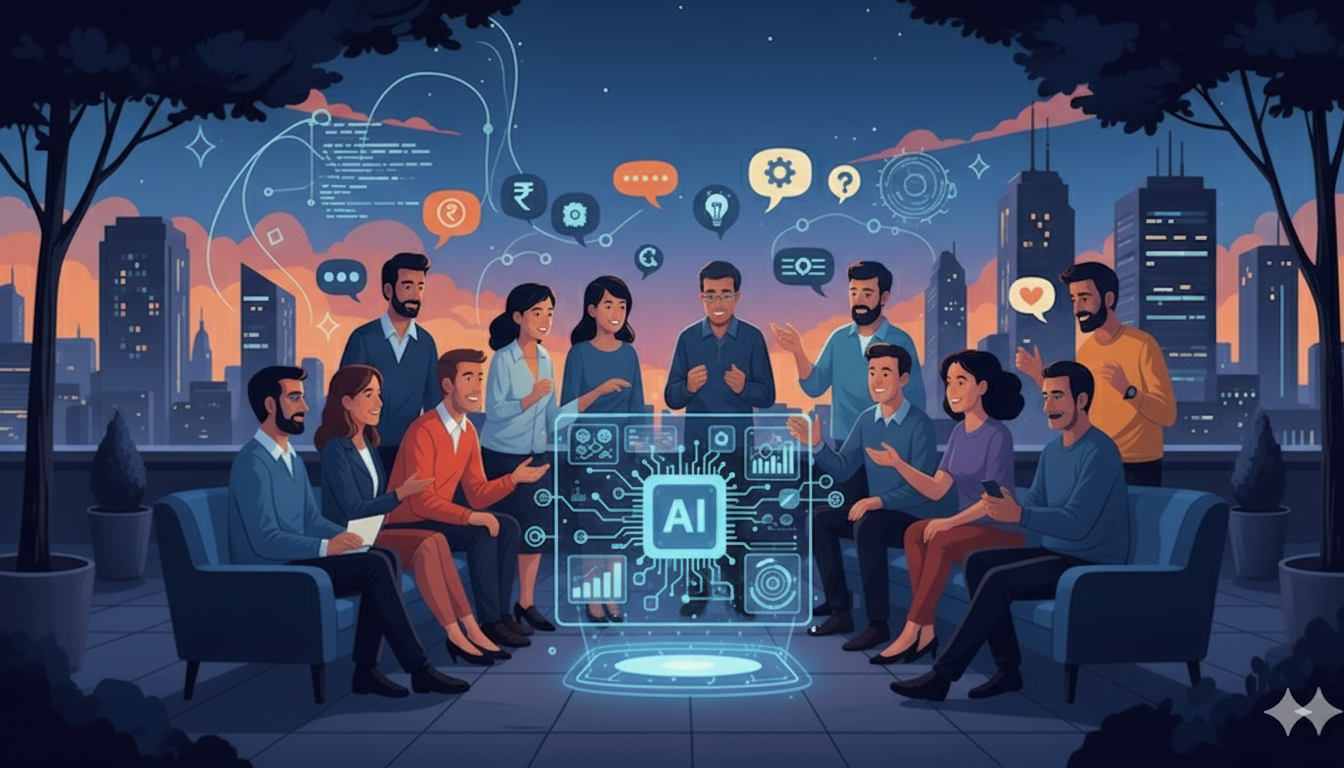
Reflections from our September 20th "Make AI Matter" workshop for Finance Professionals
The room buzzed with energy as finance professionals from across Pune gathered for what would become a hands-on exploration of AI's practical potential. What started as curiosity about artificial intelligence transformed into genuine excitement as participants witnessed their daily challenges being solved in real-time through thoughtful AI implementation.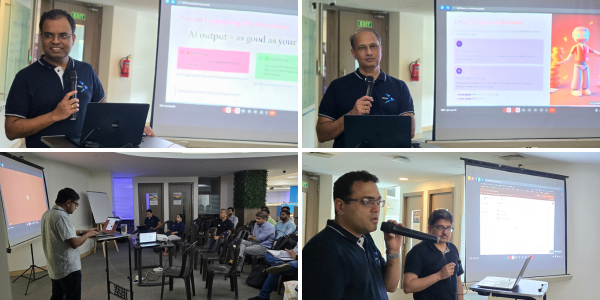
From Skepticism to Solutions
The workshop opened with a sobering reality check. While major firms like Deloitte invest $2 billion in AI targeting 75% audit automation, and PwC hires 1,000 AI specialists, many finance professionals still approach AI with a mix of curiosity and caution. This gap between industry transformation and individual adoption was precisely what we aimed to bridge.
Our approach wasn't theoretical. Within the first hour, participants watched as AI tackled a challenge familiar to every finance professional: GST reconciliation. Live on screen, we demonstrated how AI could match invoice data from supplier systems with government portal exports, handling common inconsistencies like invoice number variations and rounding differences. What typically takes hours of manual Excel work was completed in minutes, with the AI producing three clear outputs: matched entries, supplier-only transactions, and government-only records.
The power wasn't just in speed—it was in the systematic approach the AI took to data analysis, something that resonated deeply with the structured thinking finance professionals bring to their work.
The AI Toolkit: From Foundation to Specialization
Before diving into applications, we mapped the current AI landscape, giving participants clarity on which tools serve different purposes. The workshop covered the major Large Language Models (LLMs) that form the foundation of modern AI applications:
Core LLM Platforms each bring unique strengths. ChatGPT by OpenAI pioneered conversational AI and excels at creative writing and versatile text generation. Google's Gemini operates as a multimodal powerhouse, seamlessly handling text, images, audio, and video while integrating deeply with Google's ecosystem. Claude by Anthropic focuses on safety and complex reasoning, making it ideal for processing long documents with strong ethical considerations. DeepSeek AI delivers robust performance particularly in coding and technical tasks, while Grok by xAI offers real-time information access with a direct communication style, leveraging data from the X platform.
Specialized AI Tools address specific professional needs. The presentation itself was created using Gamma, an AI-powered tool that generated 70% of the slides including graphics and text. For development work, we covered AI coding assistants like GitHub Copilot and Cursor, AI-powered IDEs such as Replit and Bolt.new, and no-code platforms like Zapier and Make that enable workflow automation without programming expertise.
This diverse toolkit means finance professionals can choose the right AI for each task—using Claude for complex document analysis, ChatGPT for client communication, Gemini for data visualization, or specialized tools for specific workflows.
Beyond Automation: Building Intelligence
The workshop's core revelation was shifting from "Can AI help?" to "How can AI transform?" This mindset change became evident as we explored prompt engineering—the art of communicating effectively with these AI tools.
Participants learned the difference between asking AI to "summarize GST changes" versus "summarize GST changes applicable from 22nd September 2025 in tabular format suitable for client briefing." The latter produced structured, actionable insights rather than generic information. This specificity, combined with proper context setting, transformed AI from a basic assistant into a sophisticated analytical partner.
We demonstrated system prompts that configure AI to act as a critical thinking partner rather than an agreeable assistant. When asked to value a pharmaceutical company, a properly configured AI challenged assumptions, identified data gaps, and requested crucial information about debt levels, competitive positioning, and regulatory risks—questions any experienced financial analyst would ask.
Real Tools, Real Impact
The session showcased practical AI accelerators developed from actual business needs:
RFP Analysis Tool: Built after recognizing that teams spend weeks analyzing lengthy RFPs, this tool evaluates eligibility criteria, timeline feasibility, scoring opportunities, and potential risk clauses. It extracts key information with page references, enabling teams to make informed bid decisions quickly.
Audio Intelligence System: Demonstrated with a multilingual audio message containing English, Hindi, and Marathi, this tool transcribes content and automatically generates prioritized action items, integrating them into Google Tasks for seamless workflow management.
Strategic MIS Creation: Moving beyond standard reporting, we showed how AI can analyze manufacturing data to identify strategic insights like customer concentration risks, where 68% of sales coming from just a few customers signals potential vulnerability.
The Human-AI Collaboration Model
A critical theme emerged: AI amplifies human expertise rather than replacing it. The most powerful implementations combine AI's processing capabilities with human judgment and domain knowledge. Participants learned to use their experience for quality validation while letting AI handle data manipulation, pattern recognition, and initial analysis.
This collaboration model became clear during the workshop's reflection exercise. Participants identified time-consuming, repetitive tasks that drained their energy—perfect candidates for AI assistance—while recognizing the high-value analytical work where their expertise remained irreplaceable.
Addressing Real Concerns
Data security questions surfaced throughout the session, reflecting legitimate professional concerns. We addressed multiple layers of protection: enterprise AI accounts with data non-disclosure agreements, isolated cloud environments, and data sanitization techniques that remove sensitive identifiers while preserving analytical value.
The discussion also covered model reliability. While AI output varies due to its predictive nature, proper context setting and constraining prompts significantly improve consistency. For mathematical tasks, we demonstrated how modern AI tools automatically generate Python scripts for precise calculations rather than attempting predictive responses.
The Democratization Mission
This workshop exemplified Tekdi's core belief: technology's transformative power emerges not from sophistication but from accessibility. By demystifying AI tools and providing practical frameworks, we're working toward a future where innovative capabilities aren't concentrated in well-funded organizations but distributed across all sectors working for positive change.
The hands-on creation session that concluded the workshop drove this point home. Small groups tackled real problems using AI tools, creating functional solutions within 30-45 minutes. The energy in the room shifted from cautious interest to active experimentation—precisely the transformation needed for genuine AI adoption.
Building Forward
As participants left with working tools and practical knowledge, the broader implications became clear. Finance professionals equipped with AI capabilities don't just work more efficiently—they can take on more strategic challenges, serve clients better, and scale their impact significantly.
The Reserve Bank of India's June 2024 AI integration approval and ICAI's September 2024 AI adoption guidelines provide the regulatory framework. Major firms are investing billions in AI transformation. The tools exist and are increasingly accessible.
The question isn't whether AI will reshape finance—it's whether professionals will be empowered to shape how that transformation unfolds. Our "Make AI Matter" series continues building the knowledge and confidence needed to ensure that reshaping serves everyone working to create positive change.
Ready to explore how AI might transform your specific work? Join our growing community of practitioners who are discovering that the future of AI isn't about replacing human potential—it's about amplifying it.
Connect with our Make AI Matter community on Whatsapp to access workshop resources, continue learning, and share your AI implementation experiences.


