How Conversational AI Is Transforming Education
No one could have predicted where 2020 would take us. The last few months alone have accelerated more digital transformation than the entire previous decade. Every industry is experiencing this shift, and real change is happening at scale.
Education is increasingly becoming mobile, and educational institutions are seeking different ways to enhance learners' experiences by implementing technology solutions. Thus, academic learning, which was traditionally channelled through schools or institutions, has taken on a new form. Artificial intelligence constantly fills gaps in learning and teaching and supports personalized and streamlined education.
Extended reality, including virtual, augmented, and mixed realities, creates different learning opportunities that can engage students even further. Virtual classrooms, online exams, online forums, and activities are no longer limited to a few institutions. They have become the new normal for growing educational organizations.
Decoding Conversational AI
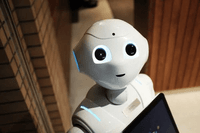
Conversational AI is an integral part of today's learning process and is set to transform the education sector. Conversational AI in education is a subset of Artificial Intelligence that has made natural dialogue between users and machines a reality. It allows users and machines to interact in human language.
By using speech-based technology and messaging software in education, Conversational AI has enabled faster response rates and human-like interactions with students, increasing student engagement and interaction with AI-powered systems.
With the help of Natural Language Processing, Conversational AI can understand intent, determine keywords, and take appropriate action based on the given algorithm. It places responsibility on the technology interface to understand what users want and adapt accordingly, making it a worthwhile investment for educational institutions.
Why Is Now the Time for Conversational AI?
The adoption of Conversational AI in education promises to transform the entire educational landscape. From integrating virtual academic advisor assistants into mailing systems to designing profile-screening chatbots for student admission evaluation, Conversational AI can take care of multiple activities.
Moreover, students expect institutions to deliver interactive and easily accessible learning experiences. Hence, integrating conversational artificial intelligence into education helps organizations align with student requirements, increase student retention, and improve organizational efficiency while equipping students with the best digital tools for success throughout their academic careers and beyond.
Impact of Conversational AI on Education
Gone are the days of studious students tucked away in massive library halls, devouring volumes of hardcover books and submitting handwritten assignments to teachers in neatly bound folders.
Those colossal books have been replaced with a simple search bar providing access to a wealth of information. The adoption of virtual classrooms and online exams has changed the entire scenario.
But apart from the obvious improvements technology has made for today's global learners, how is Conversational AI transforming education even further? Let's find out.
1. Ease of Learning
-
AI chatbots can interact with students in different environments through standard text messages or multimedia files.
-
Lectures can be converted into interactive conversation flows with the help of engagement tools and impressive UI.
-
The chatbot can continuously assess each learner's understanding and provide the next part of the lecture according to a predefined algorithm.
-
The bot can present students with adaptive assessments.
-
Assessment results can be visualized on interactive dashboards.
These capabilities also encourage Conversational Learning, where students can engage with educational content through interactive, dialogue-based experiences.
2. AI-Based Teaching Assistants
-
Conversational bots can act as virtual teaching assistants.
-
The bot can answer students' queries according to the given instructions.
-
Bots can assess students' learning progress, provide personalized feedback, and recommend relevant learning content.
3. Better Support for Students
-
An AI chatbot can help students access information about admission processes, assignment deadlines, event updates, course modules, and more.
-
Chatbots can further help prospective students find information about scholarships, hostel facilities, library memberships, and other institutional services.
4. Enhanced Student Engagement
-
Integrating AI chatbots into social media platforms can enhance students' learning processes and increase engagement.
-
These Conversational AI solutions can also act as a communication medium between students and teachers.
5. Safe and Secure Feedback
-
Conversational chatbots can conduct feedback surveys.
-
The bot can collect feedback and analyze it to highlight the most commonly mentioned points. This helps teachers identify gaps in their teaching efforts and improve their approach.
-
Teachers' feedback also allows students to identify areas where they need to put in additional effort.
Ask Tara – A Chatbot for DIKSHA
Ask Tara, a chatbot for DIKSHA, is an AI-powered conversational tool developed for educational platforms. It enables personalized interactions, allowing users to find answers to common questions and access the required content.
It connects to DIKSHA APIs to retrieve content and classification information and answers repeated or basic user queries without human intervention.
The RASA framework is used to create NLP data, enabling the chatbot to understand user queries written in natural language and respond immediately. Ask Tara can be deployed on the web and WhatsApp Messenger.
Solutions like Ask Tara demonstrate how Open Digital Ecosystems for EdTech can support accessible learning experiences through reusable technologies and integrated digital platforms.
Conclusion
The education industry is benefiting from AI's many advantages, with the results being more satisfying and transformative. Conversational AI's NLP, speech recognition, instant messaging, automation, and predictive capabilities are providing global learners with access to personalized and rapidly evolving education.
Educators can easily track each student's progress, with AI chatbots delivering personalized progress reports in real time. These developments also highlight the importance of building Mission-Critical Digital Systems for EdTech that can support growing educational requirements.
As the Growth of EdTech in India continues, educational institutions will increasingly require scalable technology solutions and reliable Engineering Partners in EdTech to develop and maintain digital learning platforms.
And this is just the beginning. The future of AI in education is expected to be dynamic and results-driven. As AI continues to advance and optimize its capabilities, we will soon witness a new era of education – the results of which will be a marvel to witness.
Frequently Asked Questions About Conversational AI in Education
1. How is Conversational AI transforming education?
Conversational AI in education improves student engagement through AI chatbots, personalized learning, automated assistance, and real-time feedback. It helps educational institutions deliver interactive and accessible learning experiences.
2. What is the role of Conversational Learning in EdTech?
Conversational Learning enables students to interact with educational content through AI-powered dialogues. It supports personalized learning, instant query resolution, and adaptive assessments, making digital education more engaging.
3. Why do EdTech institutions need an experienced engineering partner?
An experienced Engineering Partner in EdTech helps institutions build scalable learning platforms, integrate AI capabilities, and develop mission-critical digital systems that support evolving educational requirements.


