
At Tekdi, we believe in catalysing societal transformation by empowering organizations and individuals through technology. Our latest initiative, Make AI Matter, embodies this mission by making artificial intelligence accessible to everyone, regardless of their technical background or sector.
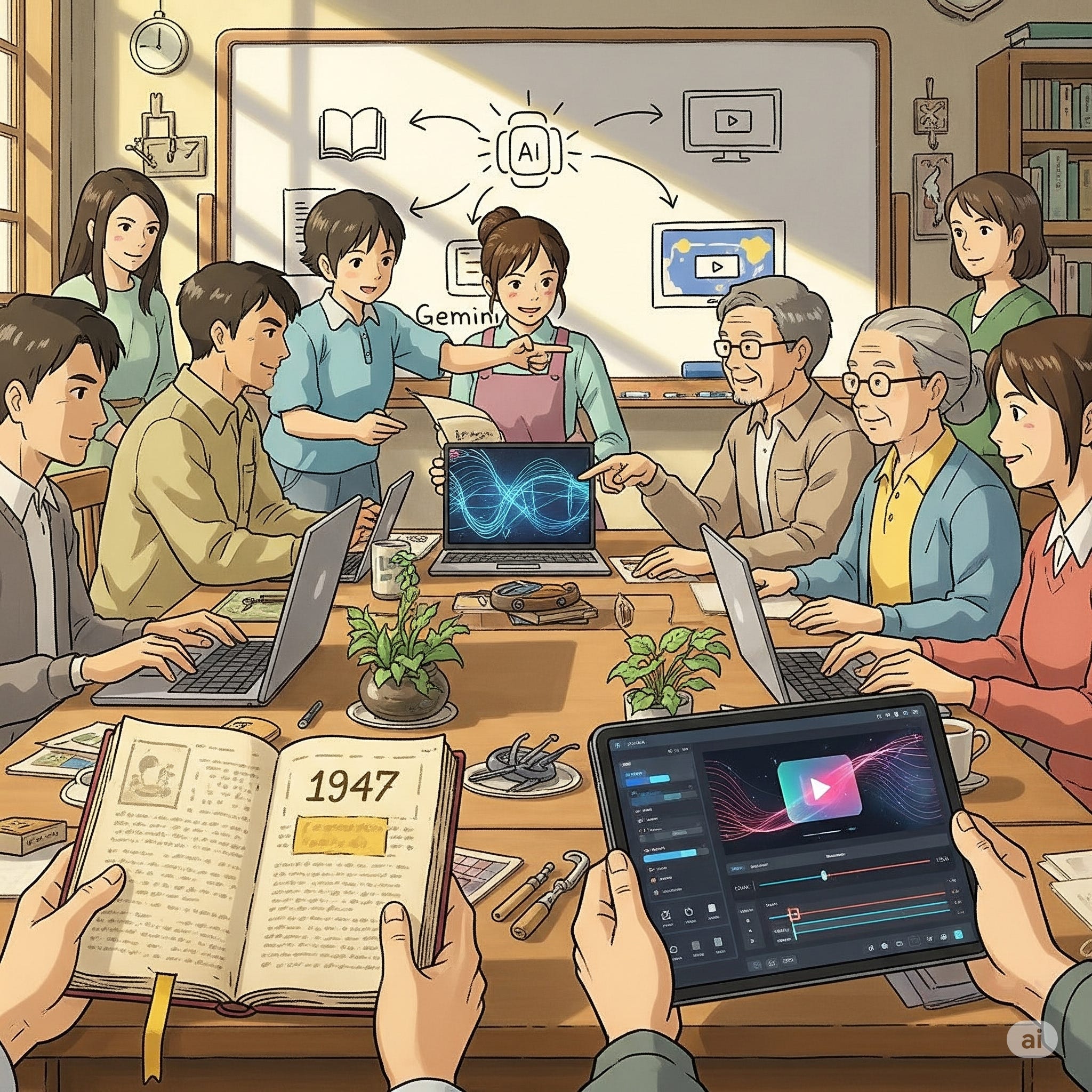
On 11th August, we conducted the first workshop in this series, focusing on content creators from diverse sectors. Participants included young adults from Manavya, artists from a drama company, and e-learning and video content creators from a Learning Content Solutions company.
The workshop brought together people with different experiences and perspectives to explore how AI can support creativity, strengthen social impact, and make technology more accessible. Here's a quick recap of how it unfolded.
From Personal Challenge to Community Solution
The journey began with a simple conversation about helping young adults at the Manavya orphanage access value-based learning from a 1947 book written in old Marathi. The challenge was to transform dated text into engaging, relatable content for today's generation.
Instead of relying on traditional approaches, we asked ourselves: "Why don't we try creating this with AI?"
What started as an experiment with 7–8 participants evolved into a 25-person workshop, bringing together nonprofits, educators, content creators, and community organizations, all eager to explore how AI could amplify their impact.
This experience highlighted an important opportunity: digital infrastructure for social impact should not be limited to large organizations with dedicated technology teams. With the right guidance, even smaller nonprofits and community groups can leverage AI to solve meaningful challenges.
At Tekdi, we believe that accessible technology, including AI-powered public platforms and digital platforms for society, can help organizations turn individual challenges into scalable community solutions.
The Magic of Collaborative Creation
Our workshop demonstrated Tekdi's core philosophy: technology should amplify human creativity, not replace it.
We didn't just teach participants to use AI tools. We showed them how to assemble "AI dream teams" of expert personas, treating AI as genuine creative partners.
In just 20 minutes, participants created their first video. Within an hour, they were producing content that would traditionally require entire production teams. But the real breakthrough wasn't speed. It was watching people realise they could become creative directors of their own visions.
One young adult created "Arjun and the Night That Wouldn't End," a complete book featuring themselves as the protagonist. The Dhruva Foundation developed educational content about early childhood brain development. Each participant discovered how AI could serve their specific mission.
These outcomes demonstrate how AI and data systems can make creative and educational capabilities more accessible to organizations that may not have dedicated technical resources.
For nonprofits and civil society organizations, such possibilities go beyond content creation. AI can support knowledge sharing, programme communication, and the development of accessible digital resources that strengthen community engagement.
By combining human creativity with technology, organizations can explore new ways of delivering value through programme platforms and digital infrastructure platforms for social-impact organizations and communities.
Beyond Tools: Building Sustainable Digital Infrastructure for Social Impact
The workshop reinforced what we've learned through nearly two decades of building technology solutions: the most powerful innovations emerge when diverse perspectives collaborate around shared challenges.
As one participant reflected:
"We should leave the non-creative stuff to AI and keep the creative stuff with us."
This captures our approach perfectly: AI should be an amplifier of human potential, not a replacement for human judgment, imagination, and creativity.
For organizations working towards social change, this distinction is particularly important. Technology adoption should not simply be about introducing new tools. It should be about building sustainable capabilities that help organizations achieve their missions.
This is also where the role of a social-impact technology organization becomes important. Beyond developing software, technology partners can help nonprofits and community organizations identify the right digital solutions, integrate emerging technologies, and build systems that can grow with their needs.
From programme management systems to impact and field data platforms, the right technology foundation can help organizations improve programme coordination, monitor outcomes, and make informed decisions.
The Tekdi Way in Action
This initiative exemplifies our core values:
Enjoying the Magic of Creation: Witnessing participants experience the excitement of building something new with AI as their collaborative partner.
Giving Back: Sharing our AI expertise with organizations that need it most, ensuring technology serves a broader societal benefit.
Building for Most, Not for Few: Making sophisticated AI capabilities accessible to nonprofits, small organizations, and community groups that typically lack such resources. We believe in building digital platforms for society that make technology more inclusive and accessible.
Giving Your Best: Applying our years of technology expertise to solve real problems for real people.
These values also shape how we approach technology partnerships. Whether supporting nonprofits, civil society organizations, or large-scale social initiatives, our focus remains on building sustainable solutions that deliver meaningful outcomes.
We believe that public service delivery platforms, open digital ecosystems, and scalable digital infrastructure can create opportunities for organizations to collaborate, share resources, and deliver services more effectively.
What's Next? Scaling Social Impact Through AI-Powered Digital Platforms
The success of our first workshop validated what we've always believed: when you democratize access to powerful technology, remarkable things happen.
Organizations across all sectors, including civil society, private enterprise, and government, can leverage AI to scale their impact and solve problems they never thought possible.
The opportunities extend beyond content creation. AI can strengthen population-scale digital platforms, improve public service delivery, and support organizations in building more effective programme and service delivery systems.
For nonprofits and philanthropic organizations, accessible technology can also enable better programme implementation, information management, and community engagement. The right engineering partner for philanthropies can help translate these requirements into sustainable digital solutions.
At a broader level, open digital ecosystems and digital public goods implementation services can help make essential digital capabilities reusable, accessible, and adaptable across organizations and communities.
Make AI Matter represents our commitment to ensuring AI's benefits reach everyone, not just technology companies. We're building more than workshops. We're fostering a community where AI literacy becomes as fundamental as digital literacy.
At Tekdi, we envision a future where technology empowers organizations of every size to create meaningful change, strengthen communities, and build solutions that work for the many, not just the few.
Frequently Asked Questions
1. What is the Make AI Matter initiative by Tekdi, and who can participate in its workshops?
Make AI Matter is a Tekdi initiative that aims to make artificial intelligence accessible to everyone, regardless of their technical background or sector. Through practical, collaborative workshops, Tekdi helps content creators, nonprofits, educators, and community organizations understand how AI can support their work. The initiative demonstrates how AI can simplify creative processes, improve content development, and help organizations amplify their social impact. Whether you are a nonprofit, a content creator, an educator, or part of a civil society organization, you can explore how AI tools can help address real-world challenges. Make AI Matter encourages participants to use technology as a creative partner while keeping human imagination, judgment, and purpose at the centre.
2. How can nonprofits and content creators use AI to create educational and engaging digital content?
Nonprofits and content creators can use AI to transform traditional learning materials, stories, and educational resources into engaging digital experiences. During Tekdi's Make AI Matter workshop, participants explored how AI could help create books, videos, and educational content tailored to their audiences. By combining human creativity with AI-powered tools, even organizations without technical expertise can develop impactful content more efficiently. AI can also support digital transformation for nonprofits by helping teams communicate their work, reach wider audiences, and make educational resources more accessible. The goal is to let AI handle repetitive production tasks while people retain creative control and focus on creating meaningful content.
3. How does AI help nonprofit organizations and community groups scale their social impact without requiring technical expertise?
AI helps nonprofits and community organizations scale their social impact by simplifying complex tasks, reducing manual effort, and making advanced technology more accessible. With the right tools and guidance, teams can create educational resources, streamline programme activities, analyse information, and communicate more effectively without building technical capabilities from scratch. Initiatives like Make AI Matter demonstrate how AI can become a practical partner for organizations working towards social change. With support from an experienced technology partner, nonprofits can also explore scalable digital solutions that improve programme management, strengthen community engagement, and make their operations more efficient. This enables organizations to focus more resources on their communities while technology supports their mission and long-term impact.


